BUILDING BIOLOGY & ECOLOGY INSTITUTE TURKEY
Areas of Activity
Advancing a healthy building culture through a holistic approach.
Building Biology: Approach and Principles
Building Biology is based on 25 core principles that guide the design and construction of healthy buildings. These principles encompass the use of natural building materials, acoustic protection, indoor environmental quality, human well-being and psychological comfort, as well as the responsible management of energy, water, and environmental resources, together with the geological suitability of the building site.
Beyond informing architectural and interior design, Building Biology is also applied to existing buildings through Building Biology Assessments (BBA). By measuring and evaluating indoor environmental conditions, potential health risks are identified and existing buildings can be improved through targeted renovation and remediation measures.


- The Evolution of Building Biology
- Building Biology in Türkiye
- German Institute of Building Biology (IBN)
BACKGROUND
Recognized as one of the pioneering concepts of ecological architecture, Building Biology was first established as a theoretical framework in Germany during the 1960s by the physician Dr. Hubert Palm. His book The Healthy House (Das Gesunde Haus) remains one of the foundational publications in the field.
During the 1970s, the Building Biology movement gained momentum, particularly in southern Germany. Early organizations such as B.A.U. (Association for Architecture & Environment) and BAB (Association for Building Biology & Architecture) laid the foundation for what is now the Institut für Baubiologie + Nachhaltigkeit IBN (IBN), the world’s leading institution in Building Biology.
Under the leadership of IBN, the Building Biology network has expanded internationally, with the Building Biology & Ecology Institute Türkiye (YBE) becoming one of its member institutes, promoting Building Biology principles and practices in Türkiye.
BACKGROUND IN TÜRKİYE
The first Building Biology studies in Türkiye were initiated in 1989 by And Akman. In the same year, he began his doctoral research, laying the foundation for a long-standing relationship with the German Institute of Building Biology + Sustainability (IBN). After completing the Institute’s Building Biology training programme in 1992, Akman graduated as a certified Building Biologist. According to IBN’s founding president, Prof. Anton Schneider, Akman’s doctoral research was the first doctoral study in the world dedicated to the field of Building Biology.
Akman’s first Building Biology project in Türkiye was a bioclimatic assessment of two nursery buildings on the Maslak Campus of Istanbul Technical University. Comparing a reinforced concrete building with an adobe building, the study examined their effects on the health of the children occupying them. This pioneering research was the first of its kind worldwide and became an international reference in the field.
He subsequently focused on Building Biology Assessments of childcare facilities, including the Atlıkarınca Nursery, as well as studies evaluating the compatibility of traditional architecture with human health in various rural regions. Akman continues his research and consultancy in Building Biology today. Over a period of 19 years, he worked in Germany alongside Willibald Rapp, where he gained extensive professional experience and conducted approximately 700 Building Biology Assessments, documenting their findings in comprehensive reports.
With the vision of establishing a Building Biology & Ecology Institute in Türkiye, Akman intensified his international efforts from 2007 onwards. These initiatives culminated in November 2014, when the first official steps were taken toward the establishment of the Institute.
ABOUT IBN (the Institut für Baubiologie + Nachhaltigkeit)

IBN reached its present position by means of the following organizations:
Healthy Building & Living Working Group* (1969-1976),
Building Biology Institute**
(1976-1983) and Neubeuern Building Biology & Ecology Institute*** (1983-2014).
The founder of these institutes Prof. Anton Schneider, had followed closely and directed the work of IBN as the honorary consultant. Following the developments in the use of terminologies, IBN changed its name to Building Biology & Sustainability Institute in 2014. The same year IBN also moved to its exemplary building in Rosenheim. Adopting an impartial and holistic approach to the counseling and education of the relationships among building-human-environment, IBN is an independent institution.
YBE CORE TEAM

And Akman has been dedicated to his academic and architectural work in the fields of building biology and ecology since 1990. His professional education began in 1981 at Mimar Sinan University and continued at New York University and the Institute of Building Biology + Sustainability (IBN) in Germany. For 17 years, he executed worldwide ecological architecture projects and building applications with the Office of Lichtblick Architecture. Since returning to Türkiye in 2007, he has focused his architectural practice and applications primarily within the country. Additionally, he served as a specialist consultant for a United Nations project from 2012 to 2014.
Leveraging his long-standing relationship with the IBN, Akman co-founded the Building Biology and Sustainability Institute Turkey (YBE) in 2015. Since then, as the co-director of YBE, he has been actively directing the institute’s consulting and training initiatives. YBE's main objectives are to develop the know-how, ecosystem, and expertise of building biology and ecology in Turkey, while increasing the number of exemplary designs, rehabilitations, and sustainable constructions.
Akman was also a leading figure in the 2018 formation of the Natural Building Materials Working Group, which paved the way for the foundation of the Natural Building Materials and Methods Association (DYMD). A member of the German Adobe Association (DVL), he represents the association in Türkiye and actively participates in the German Natureplus association, focusing on accreditations for natural building materials.
His academic contributions include spearheading the first modern earthen architecture project class at Selçuk University in 2014, where he lectured for 2.5 years. He also initiated and taught elective courses on Building Biology at MEF University (2016–2017) and led lectures in the sustainable architecture studio at Izmir University of Economics between 2017 and 2021. Today, he continues to conduct various trainings and workshops on ecological materials and construction methodologies, frequently participating as a guest speaker at international conferences. His articles and papers on building biology and ecology are regularly featured in both national and international publications.
Leveraging his long-standing relationship with the IBN, Akman co-founded the Building Biology and Sustainability Institute Turkey (YBE) in 2015. Since then, as the co-director of YBE, he has been actively directing the institute’s consulting and training initiatives. YBE's main objectives are to develop the know-how, ecosystem, and expertise of building biology and ecology in Turkey, while increasing the number of exemplary designs, rehabilitations, and sustainable constructions.
Akman was also a leading figure in the 2018 formation of the Natural Building Materials Working Group, which paved the way for the foundation of the Natural Building Materials and Methods Association (DYMD). A member of the German Adobe Association (DVL), he represents the association in Türkiye and actively participates in the German Natureplus association, focusing on accreditations for natural building materials.
His academic contributions include spearheading the first modern earthen architecture project class at Selçuk University in 2014, where he lectured for 2.5 years. He also initiated and taught elective courses on Building Biology at MEF University (2016–2017) and led lectures in the sustainable architecture studio at Izmir University of Economics between 2017 and 2021. Today, he continues to conduct various trainings and workshops on ecological materials and construction methodologies, frequently participating as a guest speaker at international conferences. His articles and papers on building biology and ecology are regularly featured in both national and international publications.
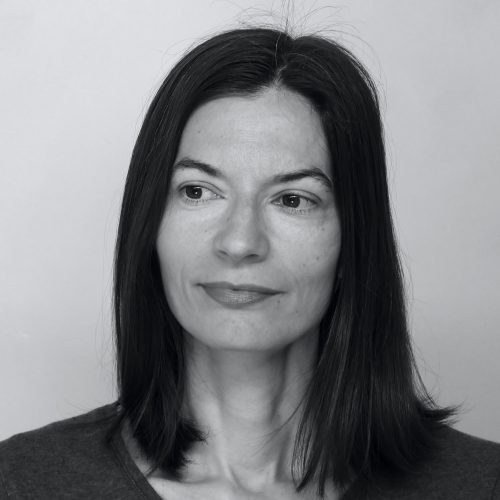
Merve Titiz Akman is a sustainability specialist with a deep focus on project management, vocational training, capacity building, and strategic partnership development within the ecological construction sector. After graduating from Koç University with a degree in Economics, she spent eight years gaining extensive experience in design, communication, and event management for pioneering Turkish enterprises before shifting her professional focus toward sustainable living and healthy settlements. Her academic foundation was further strengthened through the Design Management and Visual Communication Master’s programs at Bilgi University, followed by a Master’s in Strategic Leadership Towards Sustainability (MSLS) in Sweden, which integrated her into an international network of sustainability experts.
Since 2011, she has been a driving force in the natural building movement in Türkiye, notably organizing the country’s first international Eco-design Meeting. In 2015, she co-founded the Building Biology and Ecology Institute (YBE), where she leads the design and management of comprehensive educational curricula ranging from foundational courses to professional certification programs and hands-on workshops.
Her competence in partnerships and community building was instrumental in evolving the Natural Building Materials Working Group into a vibrant community, where she facilitated its transition into the Natural Building Materials and Methods Association (NBMM/DYMD) and continues to drive its mission as an active board member. Additionally, she is a co-founder of the Okil Natural Building Materials brand and contributed significantly to the construction of the Kadıovacık Biohouse, a flagship project realized through building biology principles.
Since 2011, she has been a driving force in the natural building movement in Türkiye, notably organizing the country’s first international Eco-design Meeting. In 2015, she co-founded the Building Biology and Ecology Institute (YBE), where she leads the design and management of comprehensive educational curricula ranging from foundational courses to professional certification programs and hands-on workshops.
Her competence in partnerships and community building was instrumental in evolving the Natural Building Materials Working Group into a vibrant community, where she facilitated its transition into the Natural Building Materials and Methods Association (NBMM/DYMD) and continues to drive its mission as an active board member. Additionally, she is a co-founder of the Okil Natural Building Materials brand and contributed significantly to the construction of the Kadıovacık Biohouse, a flagship project realized through building biology principles.
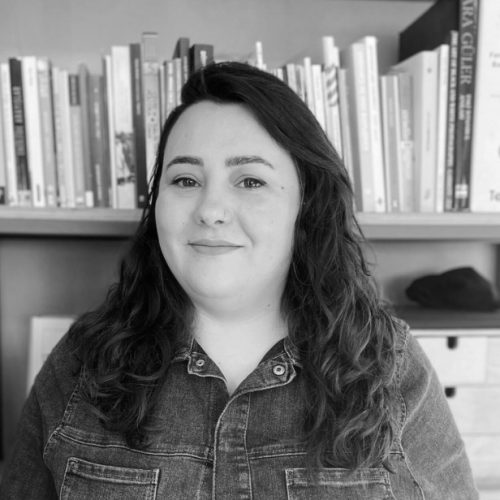
Yıldız Marie Uz Altınay graduated from the Vienna University of Technology with a bachelor's degree in Architecture in 2016. During her master's studies, she focused on sustainable architecture and lighting design.
After returning to Türkiye in 2018, she took an active role in a range of architectural design and construction projects in İzmir, contributing to both the development and implementation phases.
Since 2024, she has been working at the Building Biology and Ecology Institute (YBE), where she focuses on the design of healthy, sustainable, and environmentally responsive buildings.
MAIN STAKEHOLDERS